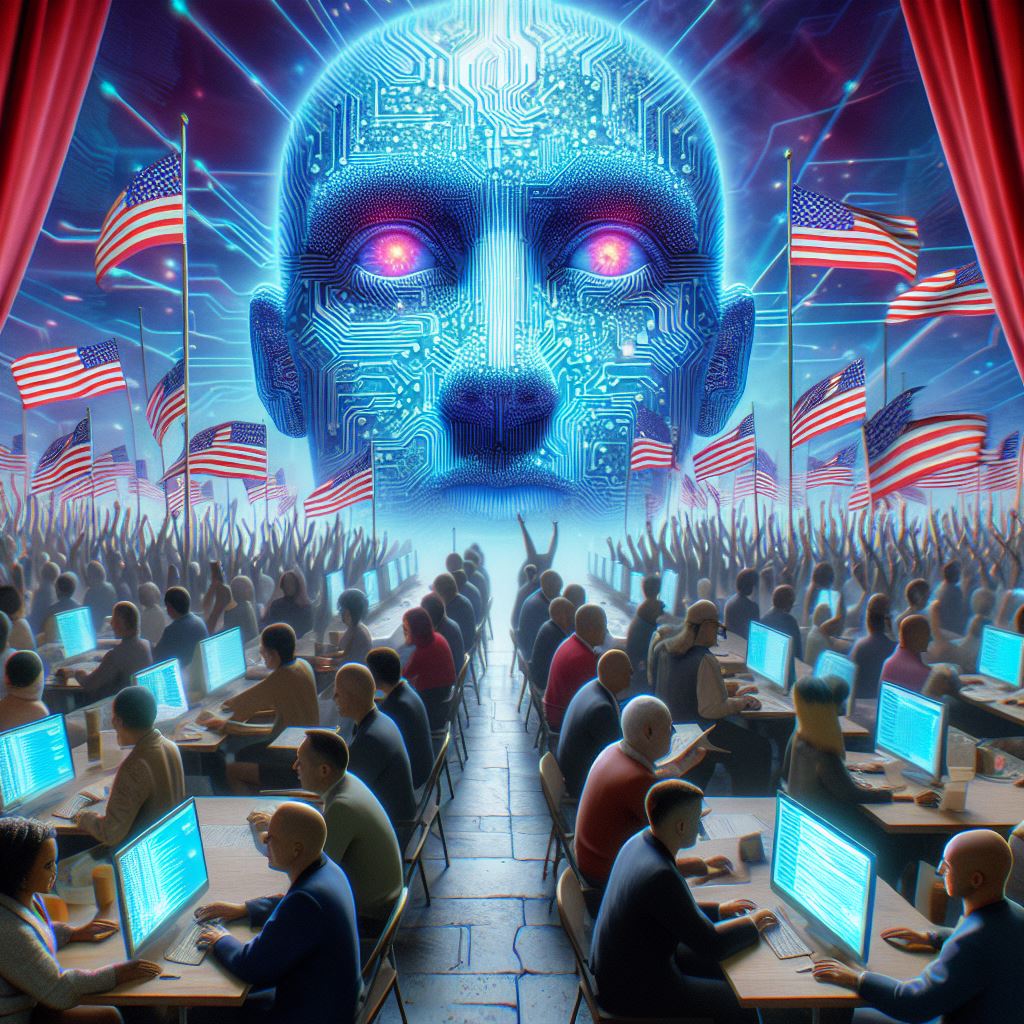
In the wake of a robocall impersonating President Biden targeting New Hampshire residents, experts caution that artificial intelligence (AI) could pose a significant threat to the integrity of the upcoming primary and presidential elections in 2024. Threat actors are leveraging AI to evade existing security measures and orchestrate larger, faster, and more covert attacks, prompting researchers to develop new defensive capabilities.
James Turgal, Vice President of Cyber Risk, Strategy, and Board Relations at Optiv and a former FBI veteran, emphasizes the potential impact of AI on the security of party election offices, volunteers, and state election systems. The goals of threat actors could range from altering vote totals to undermining confidence in electoral outcomes or inciting violence, all on a massive scale.
To address this threat, Turgal suggests that election offices implement policies to defend against social engineering attacks and provide training for staff on identifying AI-generated threats. Additionally, he stresses the responsibility of private sector companies developing AI tools to ensure that chatbots and similar platforms provide accurate information on elections and redirect users to authoritative sources.
Chris Mattmann, Chief Technology and Innovation Officer at NASA Jet Propulsion Laboratory (JPL), acknowledges the difficulty in discerning AI-generated content, particularly audio clips that replicate voices with high authenticity. The widespread availability of voice cloning software and the extensive data collected by virtual voice assistants contribute to the rapid advancement of this technology.
Mattmann highlights instances where political groups and politicians have utilized AI to manipulate content for political purposes, including the creation of AI-generated images in attack advertisements. He emphasizes the need for regulations and labeling mechanisms to inform voters about AI-generated campaign products.
While efforts are being made to develop methodologies for detecting AI-generated content, Mattmann underscores the challenges in implementing such measures effectively, especially within the context of political campaigns.
In conclusion, experts warn that the proliferation of AI poses a serious threat to electoral integrity, necessitating proactive measures from both government entities and private sector organizations to safeguard democratic processes against AI-driven interference.