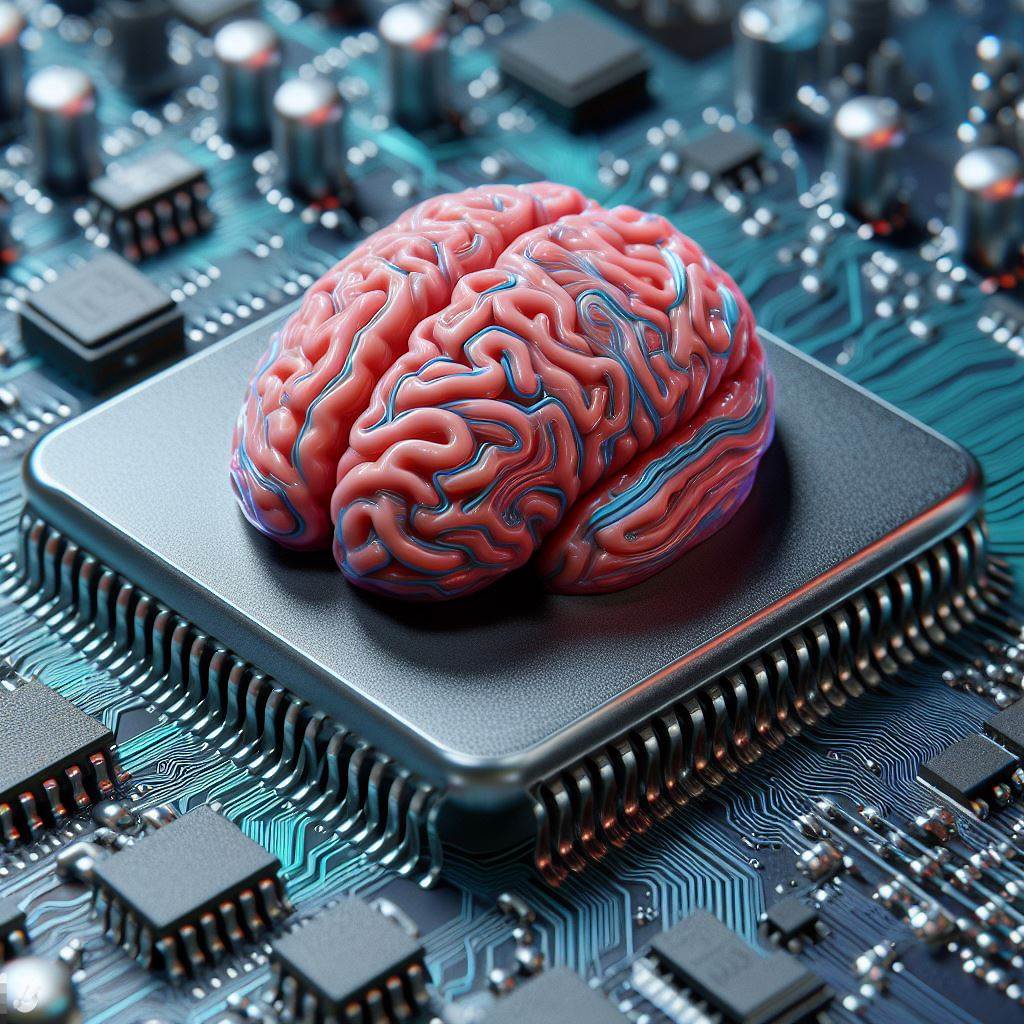
In a groundbreaking study led by Feng Guo, a bioengineer at Indiana University, Bloomington, clusters of lab-raised brain cells, known as organoids, connected to a computer exhibit elementary speech recognition and mathematical problem-solving capabilities. Guo and his team achieved this milestone by growing specialized stem cells into neurons, the fundamental building blocks of the brain, creating a ball of neurons less than a nanometer wide.
Termed "Brainoware," the organoid was connected to a circuit board with electrodes, where machine-learning algorithms decoded responses, marking a significant stride in demonstrating how brain-inspired neural networks can advance artificial intelligence capabilities. Guo highlighted the potential of organoids as a biocomputing platform, bridging the gap between AI and the intricate neural networks within mini-brain organoids.
During a brief training period, Brainoware demonstrated an impressive ability to distinguish between voices, achieving an accuracy rate of 78%. Moreover, it outperformed artificial networks in predicting a Henon map, showcasing its potential for complex tasks.
One of the key advantages of biocomputing lies in its energy efficiency. While current artificial neural networks consume several million watts a day, Brainoware operates on a mere 20 watts, paralleling the energy consumption of the human brain.
Guo envisions future applications for biocomputing systems in studying neurological diseases like Alzheimer's. The ability to tap into cellular activity opens doors to decoding brain wave activity during sleep and potentially recording dreams.
However, challenges persist. Sustaining the health and nourishment of organoids is a continuous, 24/7 task. Ethical considerations loom large as the sophistication of organoid systems increases, prompting the need for a careful examination of neuroethical issues surrounding biocomputing systems that incorporate human neural tissue.
Guo emphasizes that, while general biocomputing systems may take decades to materialize, this research lays the foundation for understanding learning mechanisms, neural development, and the cognitive implications of neurodegenerative diseases. The journey of Brainoware from concept to reality opens exciting possibilities, providing a glimpse into the potential future of biocomputing.