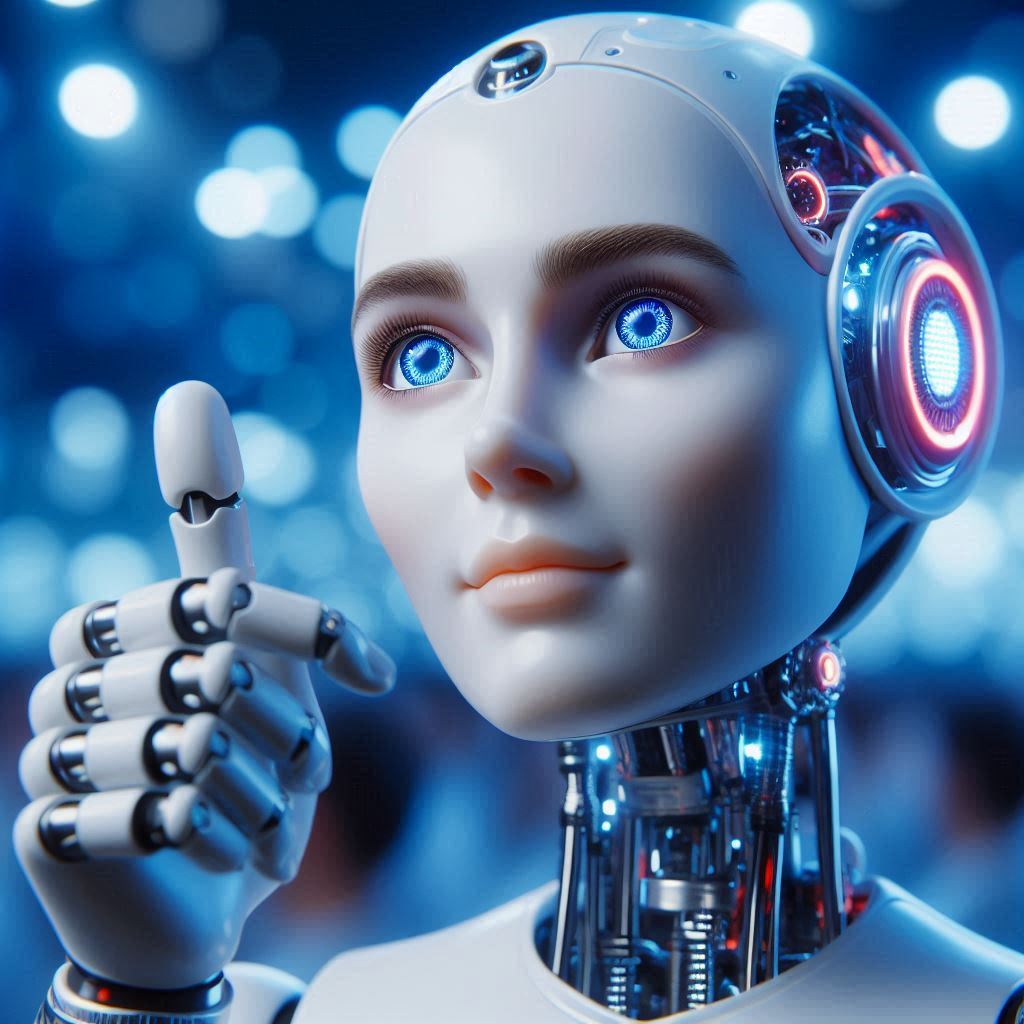
Chinese researchers from Hohai University and Changzhou University have unveiled a groundbreaking technique that enables humanoid robots to exhibit more natural and nuanced facial expressions. This development is expected to significantly enhance interactions between humans and robots.
Presented at the annual meeting of the China Association of Science and Technology and published in IEEE Transactions on Robotics, the new AI-driven method involves a two-stage process designed to improve the emotional expressiveness of humanoid robots.
The technique starts with an AI system that generates detailed images of facial expressions based on Action Units (AUs)—specific muscle movements defined by the Facial Action Coding System (FACS). These images are then used to instruct a specially designed robot equipped with multiple degrees of freedom in its facial movements to replicate the expressions.
Currently, humanoid robots face limitations in displaying emotions due to the fewer number of motors compared to the numerous muscles in a human face. This restricts their ability to produce authentic emotional expressions. To address this, the researchers, alongside collaborators from the University of Manchester and the University of Leicester, used AUs to define and replicate individual facial movements.
The AI system generates detailed facial expression images, which are converted into motor commands for the robot. The new method accounts for the robot’s motor constraints, dividing its nine motors into 17 AUs to create richer and smoother expressions. This refinement allows the robot to replicate expressions more accurately and transition between them more naturally.
The enhanced capability of these robots has promising applications in environments where emotional expression is crucial, such as nursing homes, kindergartens, and special education schools. Liu Xiaofeng, a professor at Hohai University and lead author of the research, emphasized the potential of these robots to not only assist in tasks but also provide significant emotional value to human interactions.
This innovation represents a significant step forward in the field of robotics, bridging the gap between human-like emotional expression and robotic capabilities.