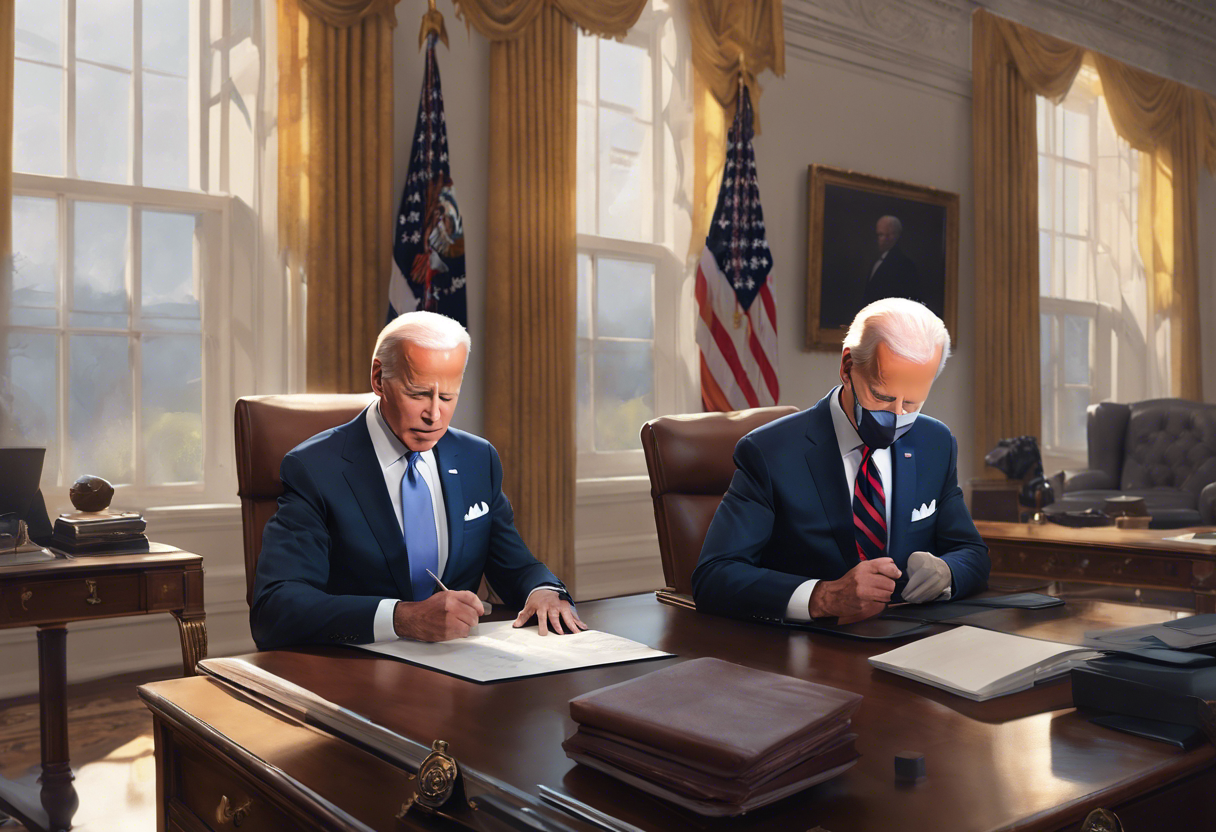
President Joe Biden's recent executive order on artificial intelligence (AI) has stirred the tech community, as experts analyze the strengths and weaknesses of the broad directives that touch on various aspects of AI safety and regulation. As federal agencies embark on the rulemaking process, businesses and consumers are eager to understand the implications that will shape the future of AI interactions.
The executive order covers a wide range of topics, from addressing bias in AI systems to testing protocols for generative AI tools. While some areas have clear directives, others remain ambiguous and will largely depend on how agencies define and implement regulations in the coming weeks and months.
One immediate focus for AI firms is the reporting and testing security requirements, particularly for companies with large-scale models, robust computer clusters, and cloud computing providers serving foreign customers. Josh Gruenspecht, a partner at Wilson Sonsini, emphasizes that these requirements will have a swift impact on major AI firms and cloud providers. However, in the long term, compliance costs may pose challenges for smaller AI companies, potentially creating a divide in the industry.
Cloud computing providers, including industry giants like AWS and Microsoft Azure, face uncertainties in the rulemaking process. Gruenspecht suggests that if these providers are required to monitor users for potentially malicious activities, it could impact the confidentiality and security of their clients, raising concerns about the practicality of such reporting requirements.
The executive order's comprehensive approach is acknowledged by Alon Yamin, co-founder and CEO of Copyleaks, a company using AI for content authentication. While praising the order's overall comprehensiveness, Yamin highlights the need for tailored solutions for different content types. He points out that a one-size-fits-all strategy for detecting AI in video, music, photos, and text may be insufficient.
Intellectual property (IP) and copyright considerations are also brought into the spotlight by OJ Laos, a senior manager at Armanino. The executive order's impact on how AI tools are designed and used could potentially restrict startups. The lack of detailed definitions in the IP and copyright section leaves room for ambiguity, signaling a potential chilling effect on innovation in the AI sector.
Overall, experts view Biden's AI executive order as a signal, with federal agencies playing a crucial role in shaping the specifics of the regulations. As the tech industry anticipates further details in the coming months, the executive order marks a pivotal moment that will influence the trajectory of AI development, use, and regulation.