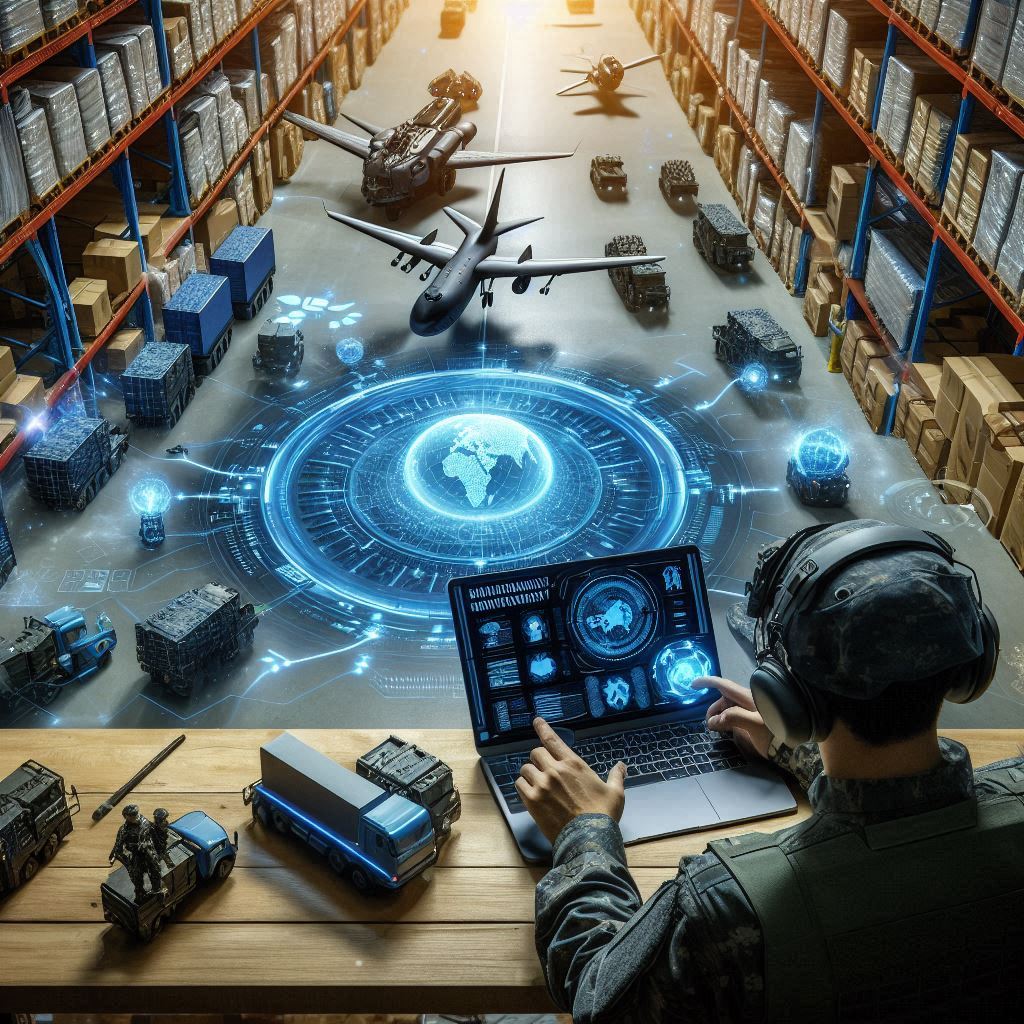
Coordinating operations within the U.S. Department of Defense (DOD) is a monumental task, given its vast number of service members, civilian employees, and an expansive array of equipment and resources. To address the complexities of military logistics and operational planning, Virginia-based startup Defcon AI has emerged with a $44 million seed round, aiming to transform how the DOD manages these challenges.
Defcon AI, co-founded by retired U.S. Air Force General Paul Selva, along with Yisroel Brumer and Grant Verstandig of Red Cell Partners, focuses on creating advanced software that aids defense operators in efficiently planning and executing missions. This software is particularly critical for commands like the Air Mobility Command, which oversees complex airlift operations involving numerous variables such as aircraft availability, crew requirements, refueling stations, and cargo handling locations.
The software developed by Defcon AI allows operators to input specific parameters and then autonomously generates optimized plans, including cost tables, resource requirements, and schedules. This capability is especially valuable in crisis situations where rapid decision-making is crucial.
“I’ve had all the jobs that we’re actually impacting,” said Selva, who, during his extensive military career, commanded the Air Mobility Command and the U.S. Transportation Command, eventually serving as the Vice Chairman of the Joint Chiefs of Staff. His deep understanding of military logistics and planning has been instrumental in shaping Defcon AI’s software.
Defcon AI’s system combines various algorithms, including machine learning and mathematical optimization, to simulate scenarios and produce the best logistical outcomes. Initially, the company utilized reinforcement learning algorithms, which do not require data, but they are now incorporating data provided by the DOD to enhance the software’s accuracy and effectiveness. The software can also simulate potential disruptions from adversaries and optimize for different variables, such as speed versus cost.
Within just two years of its founding, Defcon AI has already secured around $15 million in government contracts and delivered a production version of its software, which has been deployed in real-world operations by the Air Mobility Command. The startup is currently working to certify its software to handle classified and secret information, allowing it to ingest more data and expand its use within the DOD. Furthermore, Defcon AI is expanding its capabilities to include planning for trucks, trains, and ships, broadening the scope of its logistical simulations.
Defcon AI’s innovative approach has attracted significant interest from both the public and private sectors. Brumer noted that there is a "strong demand signal" from private industry, indicating potential applications beyond the DOD. The company’s close collaboration with end-users, particularly operational planners, is expected to yield a more effective product and provide a competitive advantage in adversarial situations.
“Operational planners are probably the most skeptical audience for decision support tools, so the extent to which you can partner with them you achieve a better outcome,” Selva emphasized.
As Defcon AI continues to refine its software and expand its applications, it is poised to play a critical role in enhancing the DOD’s ability to coordinate complex operations and respond swiftly in high-stakes situations.