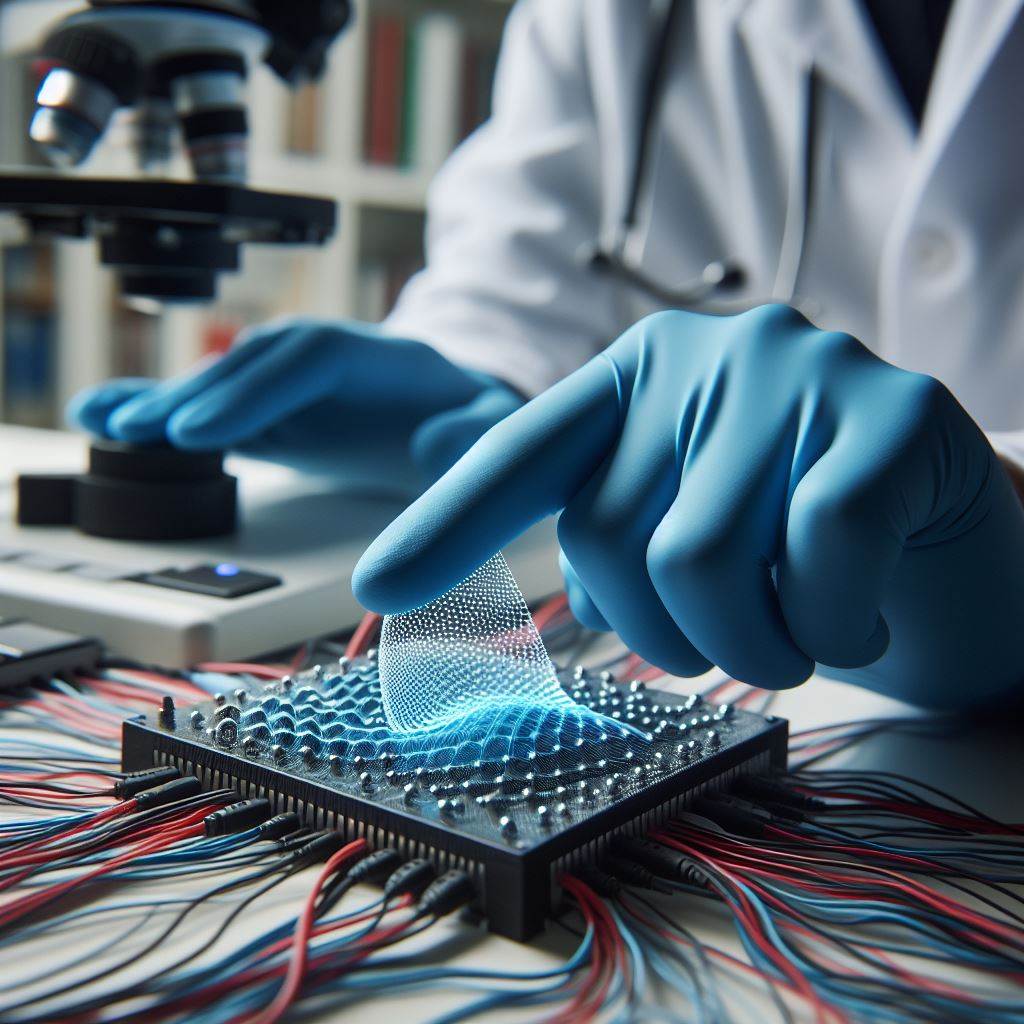
A groundbreaking study from NC State University introduces a fabric-based sensor combining three-dimensional embroidery techniques with machine learning. This innovative sensor, featured in the journal Device, aims to control electronic devices through touch, offering a new frontier in wearable electronics.
Pressure Sensor: The device consists of an embroidered pressure sensor and a microchip. The pressure sensor is triboelectric, meaning it generates electric charge through friction between its layers. It's made from yarns with positive and negative electric charges, integrated into conventional textile fabrics using embroidery machines.
Microchip: Responsible for processing the sensor's data and converting it into instructions for connected devices.
Machine Learning Algorithms: These algorithms enable the device to differentiate between gestures and ignore unintended inputs caused by the fabric's movement or environmental factors like temperature and humidity.
Rong Yin, the study's corresponding author, highlighted the difficulty of creating a three-dimensional structure using embroidery, a traditionally two-dimensional technique. The team overcame this challenge by using a spacer to control the gap between the sensor's layers, ensuring accurate readings.
The researchers showcased the sensor's capabilities by developing a mobile app that connects to the sensor via Bluetooth. The app featured six functions: play/pause, next song, last song, volume up, volume down, and mute, each corresponding to a different gesture on the sensor. Additionally, the device was used for tasks like setting passwords and controlling video games.
While the technology is still in its early stages due to limitations in existing embroidery technology, it represents a significant step forward in wearable electronics. As wearable technology continues to evolve, the integration of such innovative sensors is expected to gain traction, offering more functionalities and enhancing user experience.