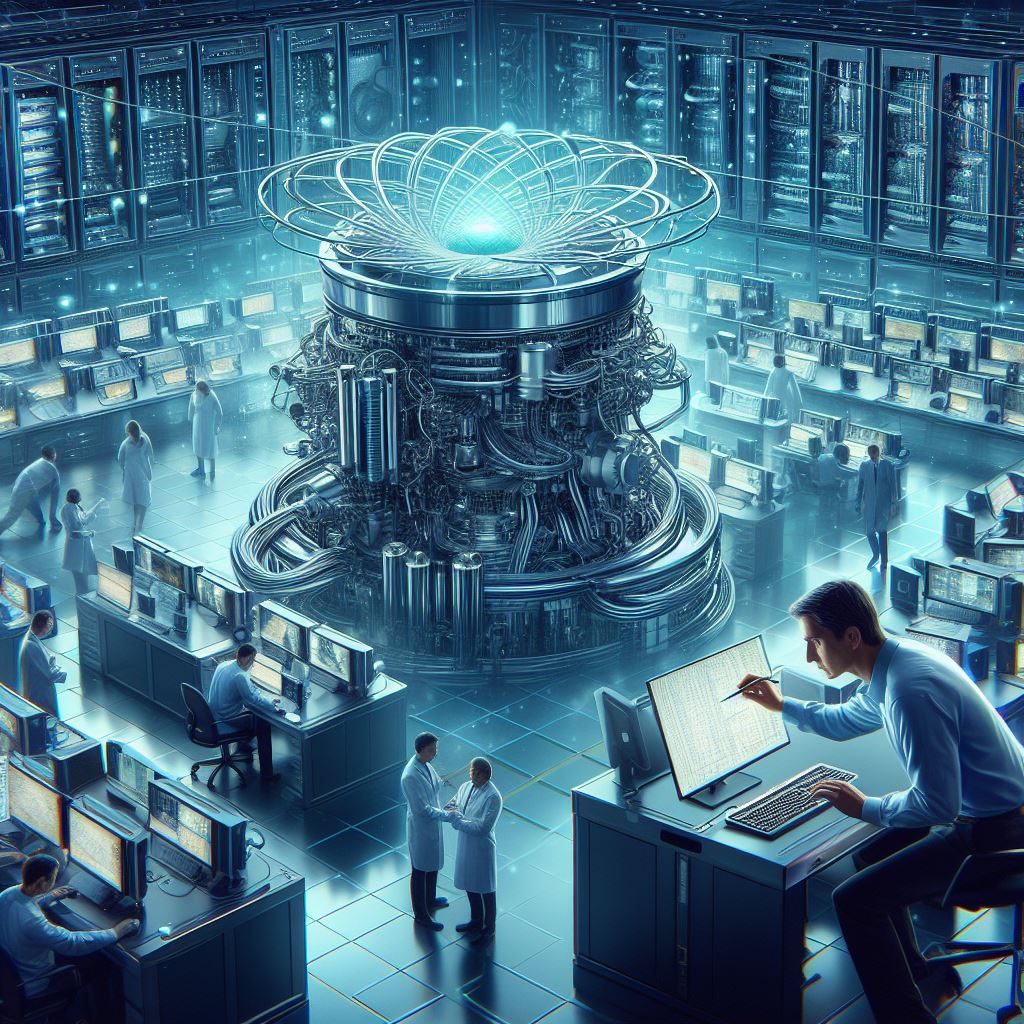
In an era characterized by an exponential increase in scientific data generation, the seamless integration of large-scale experimental facilities with powerful computing resources is paramount to keep pace with this influx of information. The U.S. Department of Energy (DOE) is at the forefront of this integration, exemplified by the ongoing massive upgrade at the Advanced Photon Source (APS) at Argonne National Laboratory, expected to generate 100–200 petabytes of scientific data annually upon completion.
This substantial increase in data production underscores the critical need for advanced computational tools to analyze data in near real-time, enabling researchers to make informed decisions swiftly. As the volume of scientific data continues to grow across various domains, from telescopes to particle accelerators, the scientific community must enhance its capability to process, analyze, store, and share these massive datasets.
Argonne National Laboratory's Nexus effort is instrumental in advancing DOE's vision of an Integrated Research Infrastructure (IRI), seamlessly connecting experimental facilities with supercomputing, artificial intelligence (AI), and data resources. By developing tools and methods to merge powerful computing resources with large-scale experiments, Argonne is leading the charge in enabling data-intensive research across various scientific domains.
Key components of this integration include the utilization of research automation platforms like Globus for managing high-speed data transfers and computing workflows, as well as the Argonne Leadership Computing Facility's Community Data Co-Op (ACDC) for large-scale data storage and sharing. These resources, coupled with the upcoming Aurora exascale supercomputer, will significantly enhance the lab's capability to process and analyze vast datasets.
The IRI initiative aims not only to accelerate data-intensive research but also to streamline scientific workflows, allowing researchers to focus more on the science itself rather than data management tasks. By automating tedious data management processes, the IRI vision seeks to optimize scientific productivity and facilitate real-time insights into experiments as they occur.
Moreover, the IRI will revolutionize the way researchers access DOE supercomputers, implementing uniform methods for quick access to computing resources across different facilities. Through initiatives like on-demand and preemptable queues on supercomputers, researchers can expedite time-sensitive data analysis tasks, enabling rapid turnaround times for experimental results.
The integration of experimental facilities with supercomputing resources has already demonstrated significant benefits, as evidenced by collaborations between Argonne and facilities like the DIII-D National Fusion Facility. By leveraging supercomputers for data analysis, researchers have achieved faster processing times and higher resolution analyses, enhancing the accuracy of experimental configurations.
Moving forward, the IRI Blueprint Activity and the Nexus effort will play pivotal roles in formalizing and scaling the integrated research paradigm across the DOE ecosystem. Through collaboration with teams from DOE experimental facilities, these initiatives aim to refine IRI ideas and establish a long-term strategy for seamless integration across diverse research areas.
The integration of large-scale experimental facilities with powerful computing resources represents a transformative shift in scientific research, enabling data-intensive investigations across various domains. By harnessing the power of data through advanced computational tools and seamless integration, the scientific community can unlock new insights and accelerate discoveries in the pursuit of knowledge.