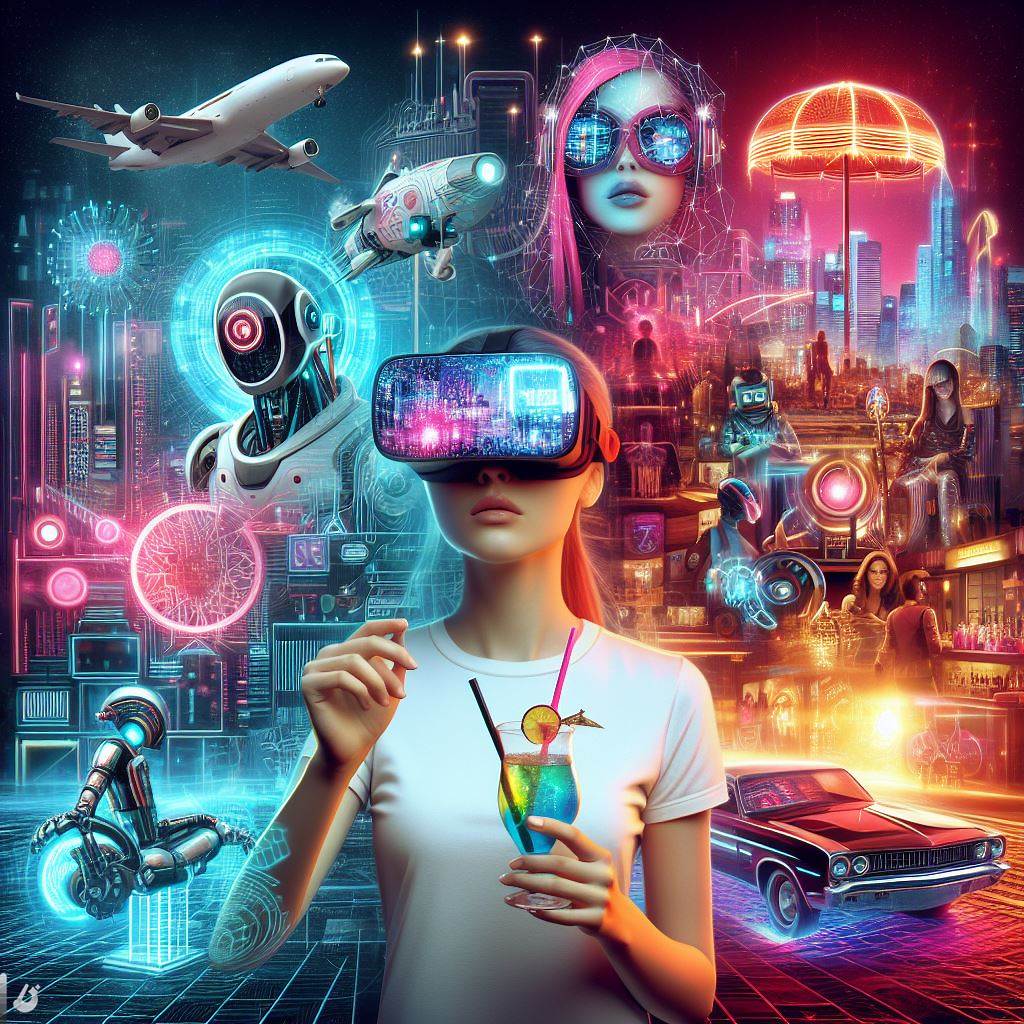
Over the past few years, the metaverse, which initially held the promise of limitless virtual experiences, encountered a setback as generative AI took center stage. Nevertheless, experts propose that premature declarations of the metaverse's decline underscore a change in emphasis—from an expansive virtual domain to a more nuanced incorporation with the physical world.
Meta, despite a substantial loss on its metaverse investment, highlights a projected growth in the metaverse economy to $400 billion by 2030, with potential impact reaching $5 trillion. The forthcoming Apple Vision Pro and the evolving landscape of augmented reality (AR) and extended reality (XR) are expected to redefine the metaverse beyond the confines of virtual reality (VR).
Analyst Marty Resnick argues that the metaverse's biggest opportunity lies in its integration with the physical world, envisioning a coexistence where users seamlessly transition between virtual and real experiences. This perspective challenges the notion of the metaverse as a solely digital phenomenon.
Enterprises are already exploring metaverse applications in augmented work learning and development. Financial giants like JP Morgan and Citibank have embraced virtual onboarding and internships, facilitating quick collaboration among new employees. The immersive nature of the metaverse allows for more impactful training, addressing sensitive topics like harassment and racism.
The industrial sector sees great potential in the metaverse, particularly in optimizing manufacturing systems through interactions with machines. Digital twin technologies, combined with augmented reality, enable workers to fine-tune production flows and simulate various scenarios for improved efficiency.
However, significant challenges persist. The adoption of virtual reality and spatial computing technologies faces hurdles such as the need for user-friendly hardware and socially acceptable designs. The lack of realistic digital content poses a considerable obstacle, demanding advancements in graphics and overlays.
Despite the temporary overshadowing of the metaverse by generative AI, experts anticipate a collaborative future where the two technologies complement each other. The integration of generative AI can enhance digital assets within the metaverse, leading to hyper-personalized environments and democratizing the overall experience.
In navigating this evolving landscape, industry leaders stress the importance of clear strategies. Rather than replicating traditional approaches, organizations are urged to reimagine processes, identifying tangible use cases to avoid inefficiencies. The metaverse, generative AI, and other evolving technologies, while ambitious, are seen as part of a more predictable evolutionary path, where breakthroughs occur at the intersection of various technological advances.
As organizations embrace these innovations, they are encouraged to strike a balance between harnessing enthusiasm and grounding aspirations in real-world problem-solving, ultimately shaping the future of the metaverse in collaboration with evolving technologies.