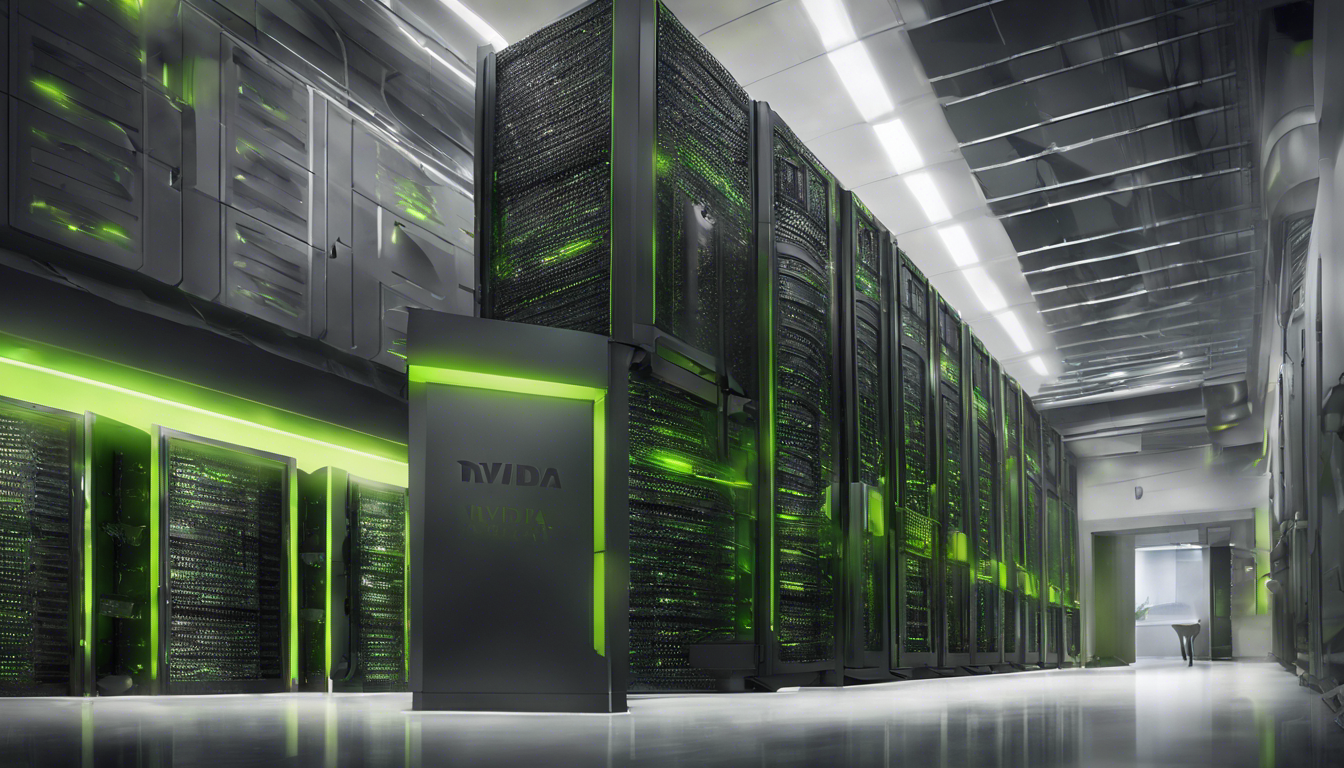
In a recent market snapshot report by Omdia, chipmaking giant Nvidia has emerged as a powerhouse in the data center industry, with its data center revenue skyrocketing to $14.5 billion in Q3—a nearly fourfold increase from the same quarter the previous year. The surge is attributed to the shipment of almost half a million H100 and A100 GPUs, marking a significant milestone for the company.
The primary driver behind this remarkable growth is the insatiable demand for Nvidia's AI chips. Hyperscale cloud service providers, including Meta and Microsoft, were among the major clients driving the Q3 GPU server shipments. Meta, in particular, showcased a substantial appetite for Nvidia's H100 GPUs, likely to fuel its expanding lineup of AI products and Copilots. Other tech giants such as Google, Amazon, Oracle, and Tencent also made significant orders, although the latter faced export restrictions imposed by the Biden administration.
Omdia analysts predict that Nvidia's GPU shipments will surpass the half-million mark by the end of Q4, underscoring the ongoing demand for high-performance hardware in the market. However, server manufacturers like Dell, Lenovo, and HPE have encountered challenges in fulfilling their H100 server orders due to a shortage of GPU allocation from Nvidia, resulting in wait times ranging from 36 to 52 weeks.
Looking ahead, the Omdia report forecasts a robust future for the server market, projecting a worth of $195.6 billion in 2027—a more than twofold increase from a decade ago. The growth is attributed to the rising significance of server processors and co-processors as companies embrace hyper-heterogeneous computing, characterized by application-optimized server configurations with numerous co-processors.
For servers involved in AI training and inference, popular configurations include Nvidia's DGX server with eight H100/A100 GPUs and Amazon's servers for AI inference featuring 16 custom-built co-processors (Inferentia 2). Video transcoding servers, equipped with custom-built co-processors, are led by Google's server with 20 VCUs and Meta's server with 12 Scalable Video Processors.
The authors of the report anticipate this trend to expand beyond media and AI applications, with databases and web services likely to undergo a similar optimization push as demand matures.
Furthermore, the report highlights the impact of highly configured servers for AI on data center physical infrastructure. Rack power distribution revenue in the first half of the year exceeded expectations, showing a 17% growth compared to the previous year. Data center thermal management revenue is also on track for a 17% growth in 2023, driven by higher rack densities requiring advanced liquid cooling solutions.
In a forward-looking statement, the authors stress that the only limiting factor for the current pace of AI deployment is power availability. With the expected increase in professional services for generative AI, set to drive broad enterprise adoption in 2024 and beyond, the industry is witnessing an intriguing trend where sought-after GPUs are leveraged as debt instruments, further emphasizing the pivotal role played by Nvidia in the evolving landscape of AI and data centers.