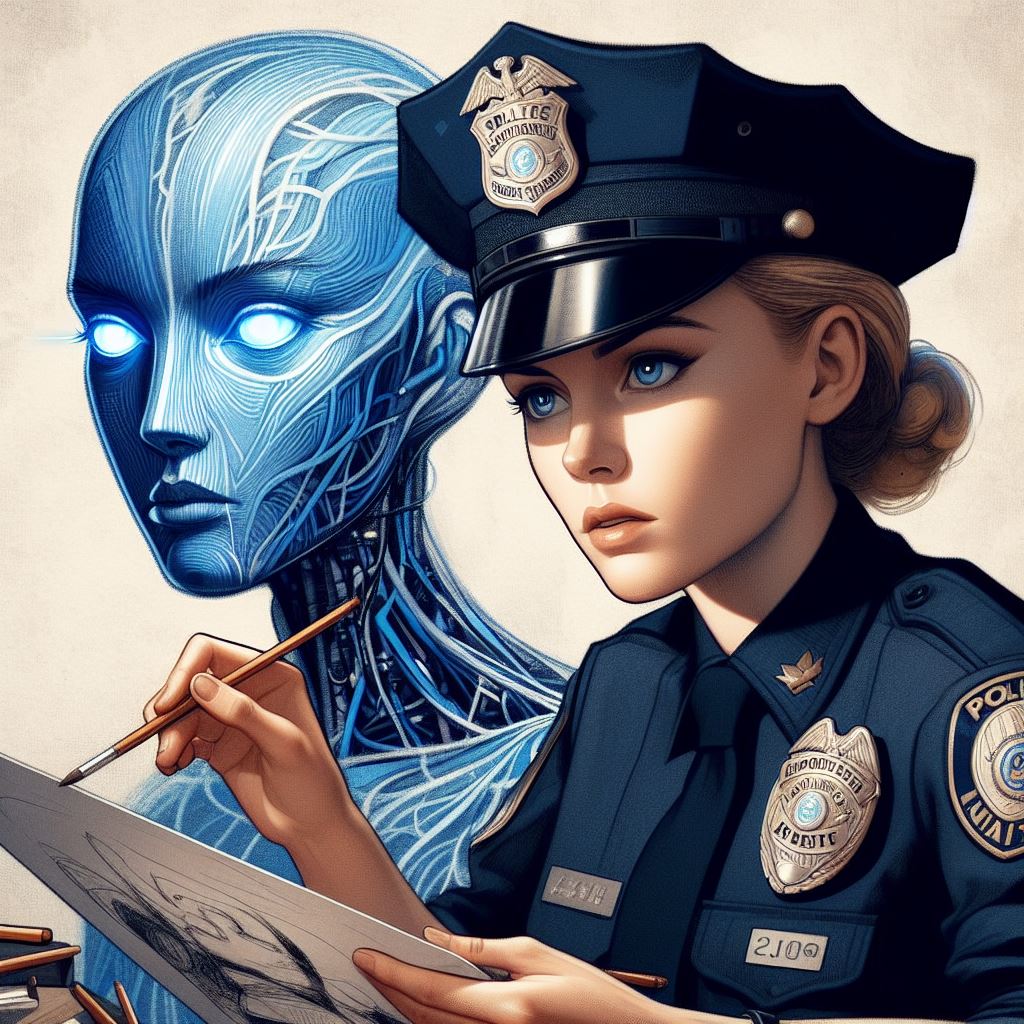
Lois Gibson, a record-breaking police artist, questions the effectiveness of artificial intelligence (AI) in creating composite sketches. With over 1,300 positively identified suspects to her name, Gibson believes that human artists possess an interpretation skill that AI lacks.
Gibson, holder of the Guinness World Records for the most positively identified criminals through composite sketches, shared her skepticism in an interview with the organization. Despite trying various computer programs designed for sketching, she found them lacking. “I found out, scientifically. It’s a fact,” Gibson, 74, stated. Despite her efforts to utilize AI tools after undergoing training, she consistently had to redo AI-generated sketches manually.
Gibson emphasized the unique human touch in her work. “It just doesn’t even come close because you have to be an artist like me,” she remarked. She believes that the nuances and interpretations in sketches require human expertise.
The tech industry is heavily investing in AI, with giants like Microsoft and Google claiming it will replace many human tasks. However, Gibson stands firm in her belief based on her extensive experience.
Starting her career in 1982, Gibson's sketches have helped authorities identify more than 1,300 suspects, leading to many convictions. Guinness World Records has recognized her for this achievement for about 20 years.
Gibson's journey to becoming a forensic artist began unexpectedly. Previously a model, her life took a turn when she survived a traumatic assault in her early twenties. This experience led her to pursue art as a means of healing and eventually to a career in forensic art.
Working with the Houston police department until her retirement in 2021, Gibson used her skills to assist in identifying criminals ranging from burglars to murderers. She developed techniques to help victims recall and describe their attackers accurately, which improved the accuracy of her sketches.
Gibson’s work has a significant impact on the criminal justice system. Eyewitness misidentification contributes to wrongful convictions, according to the Innocence Project. Composite sketches, like Gibson's, play a role in identifying suspects when investigators have limited leads.
Despite some skepticism about the effectiveness of sketches, Gibson believes in their value. “They are... and [the record has] helped me prove that,” she stated.
Her dedication to her craft is evident, and she values her Guinness World Records recognition as it adds “legitimacy” to her work. Gibson remains committed to her profession, finding fulfillment in helping catch criminals with her art.