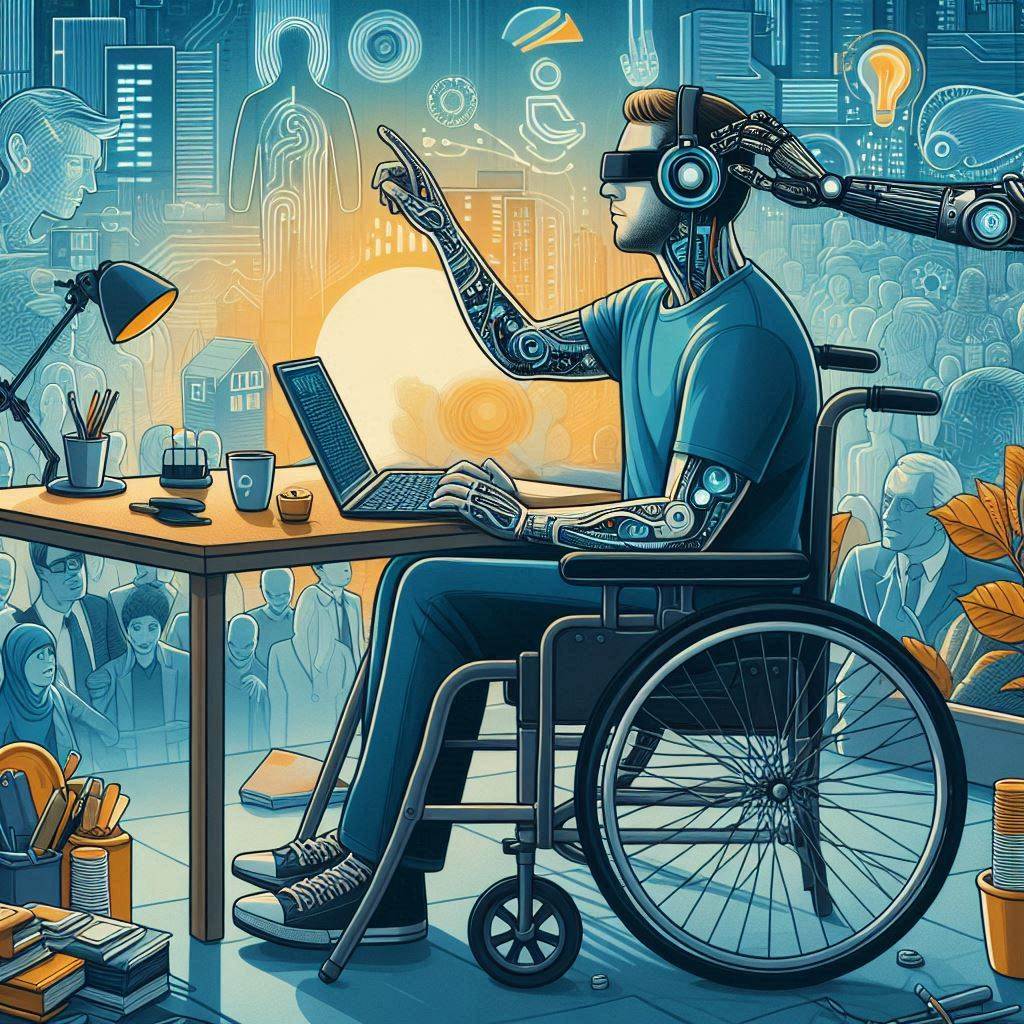
You might have heard that artificial intelligence will revolutionize everything, either saving the world or creating a dystopia. However, let's consider AI as assistive technology, something that helps us function. The disability community, experienced in using and giving assistance, offers valuable insights into how everyone might relate to AI systems in the future. This perspective drives my work as a disabled person and researcher in AI and robotics.
While independence is highly valued, no one is entirely independent. We all rely on others for various needs. Disabled people, having more visible support needs, have a deep understanding of what it means to need help to live. The curb-cut effect, where technologies designed for disabled people benefit everyone, underscores the importance of accessibility in good design.
Receiving unasked-for help can often be intrusive. Disability advocates promote assistance as a collaborative effort, keeping the person in control. This model can be applied to AI, ensuring new tools support human autonomy. My lab aims to develop AI-powered assistive robotics that treat users as equal partners, leading to better interactions and creative problem-solving.
AI often relies on large datasets, favoring common patterns and potentially overlooking disabilities. This can lead to AI systems that fail to accommodate disabled users. My goal is to make AI more responsive to human variation. By learning from the disability community, we can create AI systems that truly serve people's needs, putting them in the driver's seat.
By viewing AI through the lens of assistive technology and learning from the disability community, we can ensure that future AI systems enhance human autonomy and inclusivity.