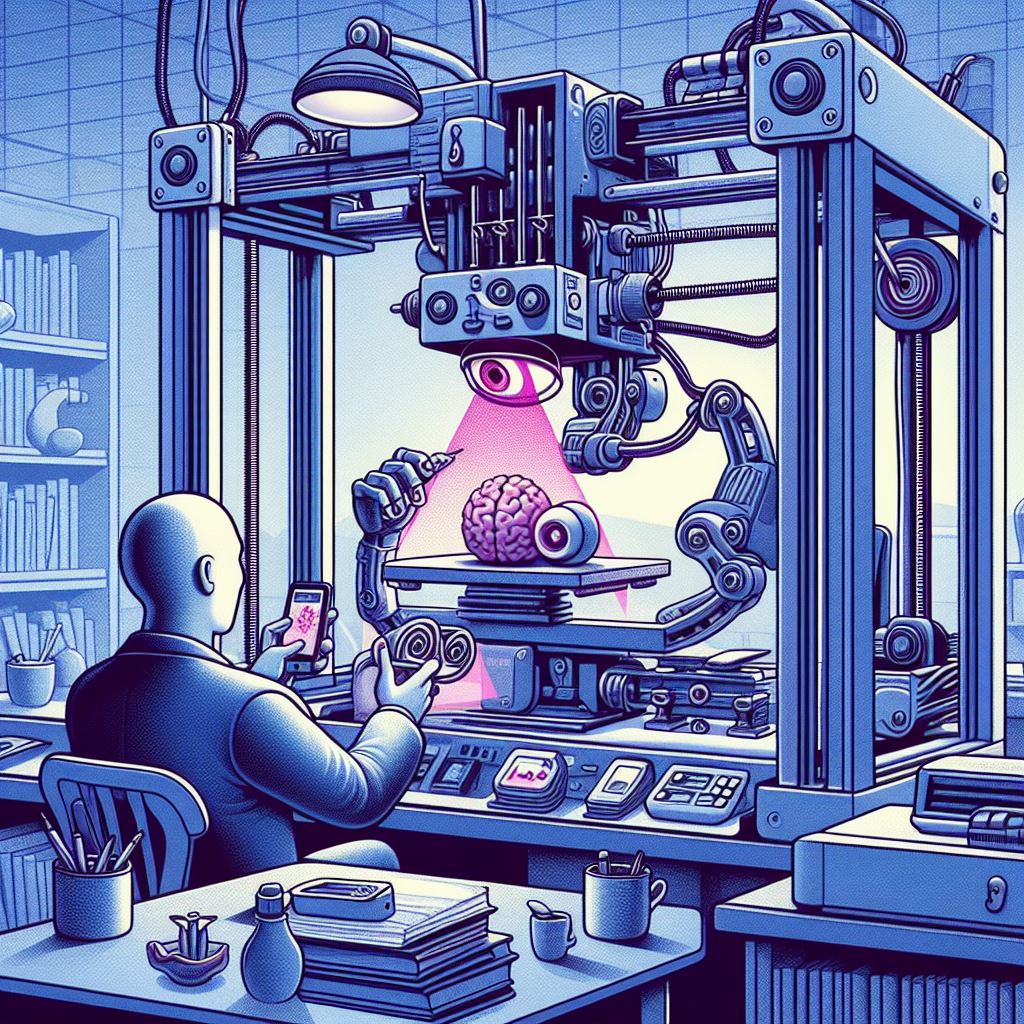
MIT researchers unveil a revolutionary 3D printer that employs machine vision to redefine the boundaries of material possibilities and print complex devices faster than ever before.
MIT's latest creation, a contactless 3D printing system, has transcended the limitations of traditional printers by eliminating the need for mechanical components to smooth resin, enabling the use of materials with slower curing times. This innovation paves the way for engineers to craft intricate and durable creations, such as a robotic gripper mimicking a human hand, operated by flexible and reinforced tendons.
The newly developed 3D printer boasts a remarkable speed, printing a staggering 660 times faster than comparable 3D inkjet printers. This achievement builds upon the success of the MultiFab, an affordable, multi-material 3D printer introduced by MIT in 2015.
The core of this advancement lies in MIT's vision-controlled jetting method, integrating high-frame-rate cameras and lasers to monitor the printing surface continuously. As tiny resin droplets are ejected, computer vision processes images into a detailed depth map in under a second. This map is then compared against the CAD model, allowing for precise adjustments in resin output, ensuring unparalleled control over the printing process.
The implications of this technological breakthrough extend beyond the printing speed and material range. The MIT project is part of a growing movement to incorporate machine learning into 3D printing. AI-generated designs can be swiftly translated into reality, enabling rapid prototyping and testing. Nat Trask, a professor of engineering at the University of Pennsylvania, emphasizes the potential of generative models to explore intricate designs targeting different material responses.
AI's role in 3D printing extends beyond design. Ben Schrauwen, SVP and GM of Oqton, a 3D printing company, underscores the impact of AI in expediting the discovery and development of new polymers and alloys. From molecular and atomic structures to automating design processes and enhancing quality control, AI is reshaping the landscape of additive manufacturing workflows.
Oqton's AI-based software, designed for dental labs, exemplifies the transformative power of automation in file preparation for 3D printing. As more industries recognize the cost-effectiveness and efficiency of 3D printing, AI's influence is poised to grow, making processes more predictable, streamlined, and conducive to innovation.
MIT's 3D printing breakthrough and the wider integration of AI in the field mark a pivotal moment, propelling manufacturing into a new era of possibilities, efficiency, and precision.