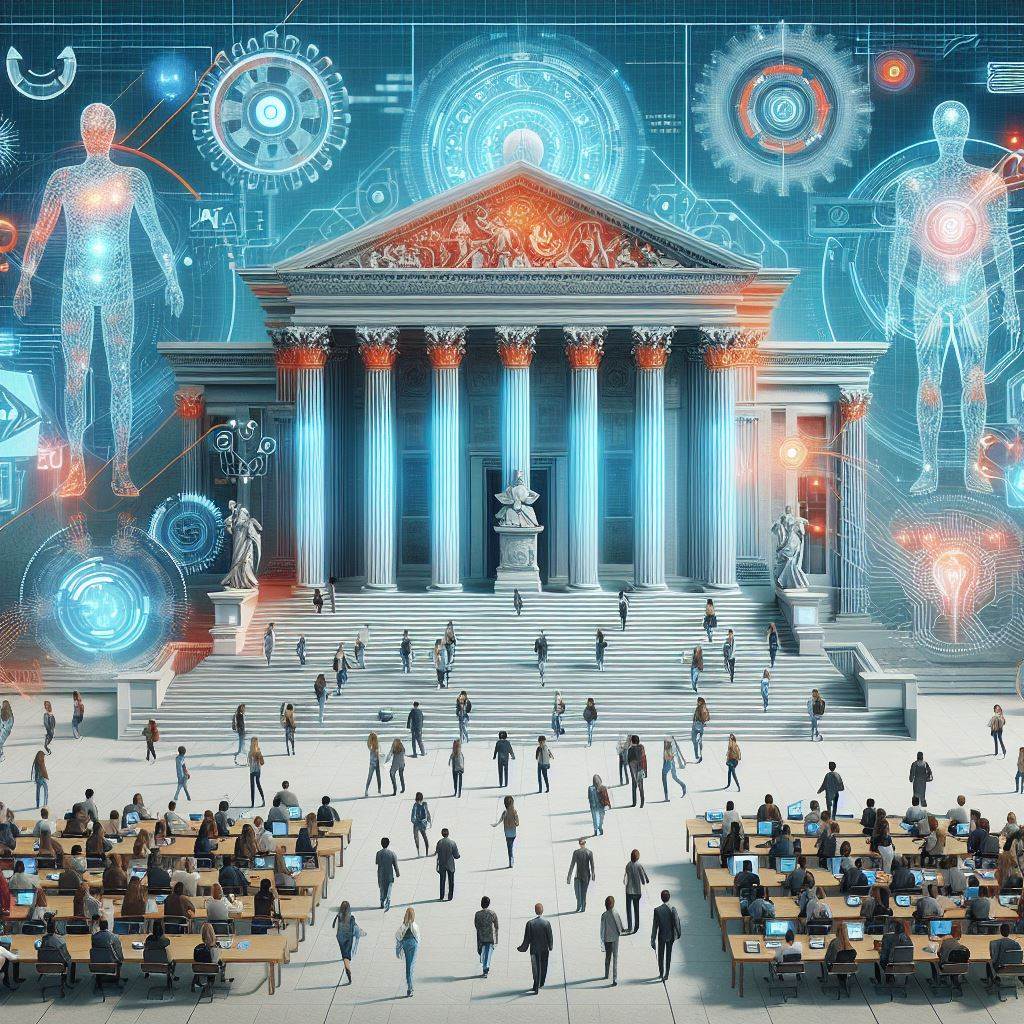
A recent study sponsored by Turnitin has shed light on the evolving landscape of student attitudes towards artificial intelligence (AI) tools in academic settings. Surprisingly, the study reveals that 75% of surveyed students would continue utilizing AI tools even if their professors or educational institutions were to ban them. This revelation underscores the growing influence of AI in education and the challenges it poses to traditional notions of academic integrity.
"As artificial intelligence evolves, faculty members and school officials are grappling with the implications and are actively devising new guidelines and curriculum to adapt," remarks Cherry McCabe, Associate Provost for Curriculum and Instruction at Biola University. McCabe expresses concerns about the potential for students to bypass original work entirely with the aid of AI, highlighting the need for schools to address this issue proactively.
In response to the prevalence of AI usage among students, educational institutions are exploring various strategies to maintain academic honesty. Biola University, for instance, deliberated the implementation of campus-wide AI-detection software following the release of ChatGPT 3.5 in November 2022 but ultimately opted against it. McCabe emphasizes the importance of fostering academic integrity through personalized approaches such as small class sizes and faculty-student relationships, citing them as more effective alternatives to stringent policing measures.
Similarly, Pepperdine University has adopted a nuanced approach to AI detection, utilizing software like Turnitin while granting faculty discretion in incorporating and addressing AI usage. Jennifer Miyake-Trapp, Associate Professor at Pepperdine University, acknowledges the diverse applications of AI across subjects and advocates for tailored responses that leverage professional judgment.
Despite concerns surrounding academic integrity, both faculty and students recognize the indispensability of AI tools in preparing for the workforce. Many students, like Biola junior Joseph Hartono, actively engage with various AI platforms, acknowledging their significance in academic and professional endeavors. Others, such as Biola sophomore Clarissa Jocelyn, emphasize the importance of balancing AI usage with foundational learning.
The Turnitin study also highlights a shifting perception among students, with nearly half acknowledging the positive impact of AI on their learning. Concurrently, there has been a decline in faculty members expressing concerns about AI negatively impacting education, signaling a growing acceptance of AI's role in the academic sphere.
As AI continues to permeate educational environments, educators and students alike are navigating the complexities of integrating technology while upholding academic standards. Balancing innovation with integrity remains a paramount challenge as educational institutions strive to prepare students for an AI-driven future.