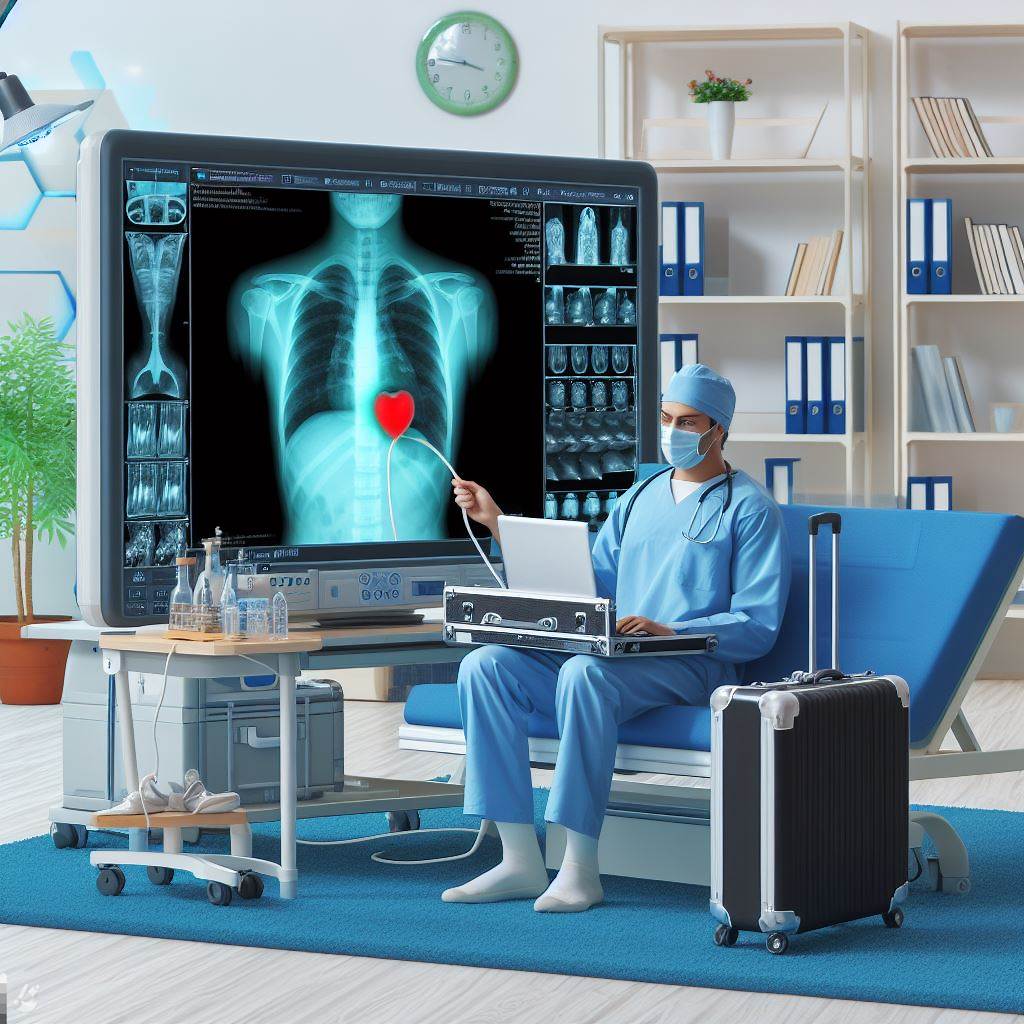
Portable X-ray machines have emerged as crucial tools in medical diagnostics, with radiographer Sam Pilkington highlighting their life-saving potential. For acutely unwell patients or situations requiring infection control, portable machines offer a vital solution by eliminating the need for patients to undergo the additional burden of transportation. According to Pilkington, these machines play a pivotal role in various settings, including remote locations such as battlefields, roadsides, and disaster zones.
The global portable X-ray market, valued at $7.1 billion last year, is witnessing rapid growth, driven in part by the demands of the COVID-19 pandemic. Projections indicate that this market could reach $14 billion by 2028.
In essence, there are two types of portable X-ray machines: mobile units on wheels and ultraportable devices that can be carried by a single person. The latter, exemplified by the Fujifilm Xair weighing just 3.5kg, has shown remarkable effectiveness during a trial in the Orkney Islands, where the non-attendance rate for X-ray appointments was reduced to zero.
Manufacturers like OR Technology and Fujifilm are actively contributing to the accessibility of healthcare in emerging markets. Tim Thurn, Chief Commercial Officer of OR Technology, notes a significant demand for bringing healthcare directly to people.
The impact of portable X-ray machines extends to transforming tuberculosis (TB) screening in countries like the Philippines and Nigeria. Suvanand Sahu, Deputy Executive Director of the Stop TB Partnership, emphasizes that these machines, often equipped with artificial intelligence software, have revolutionized field detection, making it faster and more accurate.
Despite their benefits, concerns about radiation and image quality persist. While portable systems lack the shielding found in hospital x-ray rooms, experts argue that the open spaces where they are used compensate for this. Additionally, recent advancements have brought the image quality of portable machines on par with their fixed counterparts.
However, challenges remain, including the limitations on the size of X-ray components, potential issues with battery life, and the high cost of portable machines. Manufacturers like Micro-X are addressing some of these challenges by developing ultraportable x-ray machines that are lighter and more cost-effective.
As the field continues to evolve, Dr. Suvanand envisions a future where everyone in need has access to modern, digital, ultra-portable X-ray machines with AI capability. The growing adoption of these portable technologies promises to reshape healthcare delivery, particularly in remote and underserved areas globally.