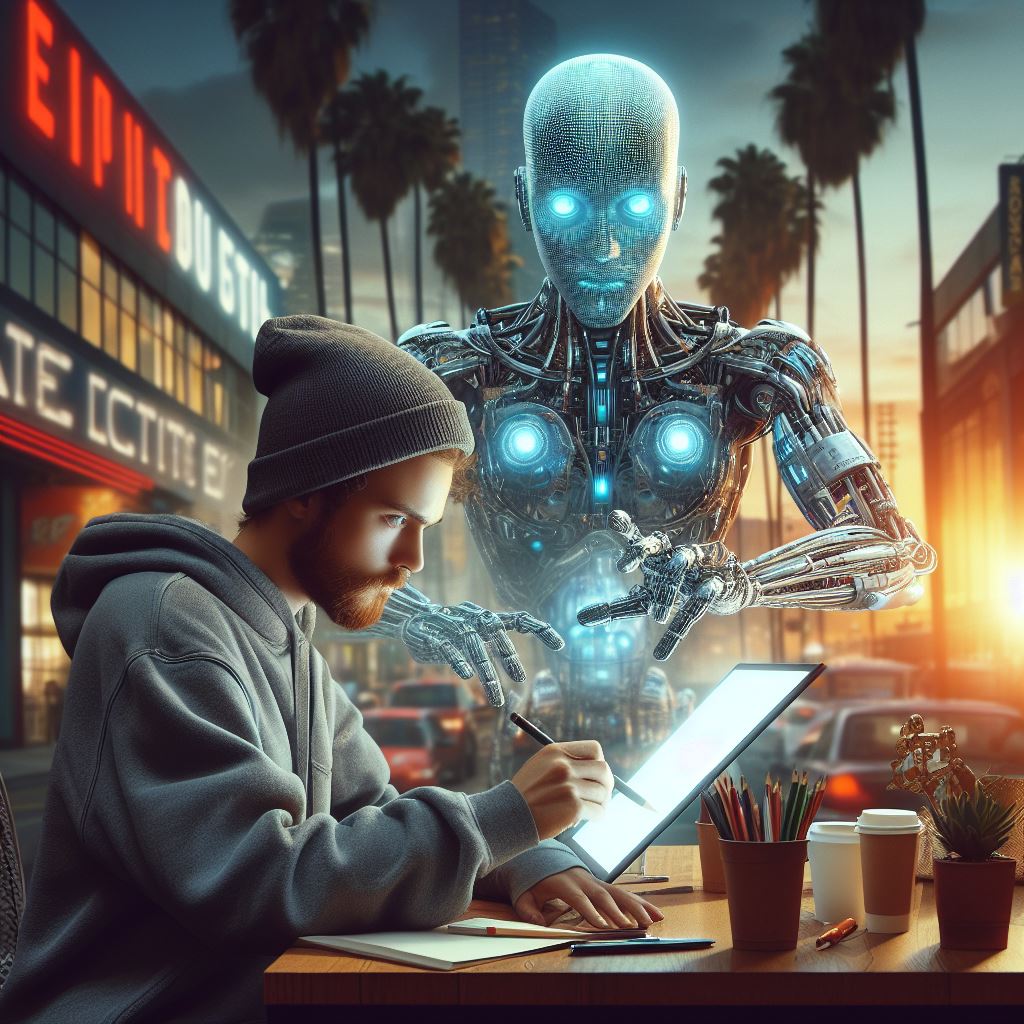
As Hollywood kicks off the new year, industry leaders are grappling with the implications of integrating artificial intelligence (AI) into the entertainment landscape. In a recent roundtable interview with the Los Angeles Times, executives discussed both the potential benefits and challenges posed by AI.
Jonathan Glickman, CEO of Panoramic Media Co., acknowledged that AI's impact on the writing process might be limited in the near future due to the perceived quality gap. He stated, "I don’t think it’s really going to affect the writing process very much for the near future, just because the quality is so far below anything that an audience would stand for."
However, concerns arise regarding certain intermediary roles that blend technical and creative aspects. Glickman highlighted a notable shift: "You can now feed a script into the ChatGPT and get coverage of it immediately. Synopsis. They actually do comments. That’s a job that used to go to an up-and-coming kid who is going to learn how to analyze material."
Sam Register, president of Warner Bros Animation and Cartoon Network Studios, expressed worries about potential job losses and the impact on learning opportunities: "As an animation studio, I just think it’s important we protect the artists and the art form as long as we can."
Nicole Brown, president of TriStar Pictures, emphasized the essence of human experience in entertainment, stating, "Movies are about someone’s experience, someone’s perspective, someone’s vision. So, even though there was a lot of discussion about AI during strikes, as someone building content, I want to work with human beings."
Chris Hart, partner and co-head of talent at United Talent Agency, echoed the sentiment, emphasizing the agency's commitment to working with people.
On the flip side, not everyone in Hollywood shares the same level of concern about AI. Howie Mandel, a judge on "America’s Got Talent," expressed enthusiasm for embracing AI in his work: "I am embracing AI. I have AI in my office." However, he did advocate for some regulation to protect intellectual property rights.
Similarly, Jack Black and others adopt a more optimistic outlook, viewing AI as a tool that can enhance creativity and productivity, rather than a threat to human jobs.
Despite varying opinions, the integration of AI into Hollywood remains a contentious topic. Some, like Justine Bateman, firmly reject AI's role in the arts, arguing that it doesn't solve any real problems and may replace human talent unnecessarily.
The impact of AI was evident in the negotiations between Hollywood studios and unions during the 2023 strikes. Both actors and writers unions ratified new contracts with AI provisions, safeguarding writers’ content and actors’ likenesses until 2026.
Looking forward, there is potential for further disruption, as noted by Glickman, who pointed out the possibility of another strike on the horizon by IATSE, the International Alliance of Theatrical Stage Employees, which encompasses crucial behind-the-scenes positions in the industry.