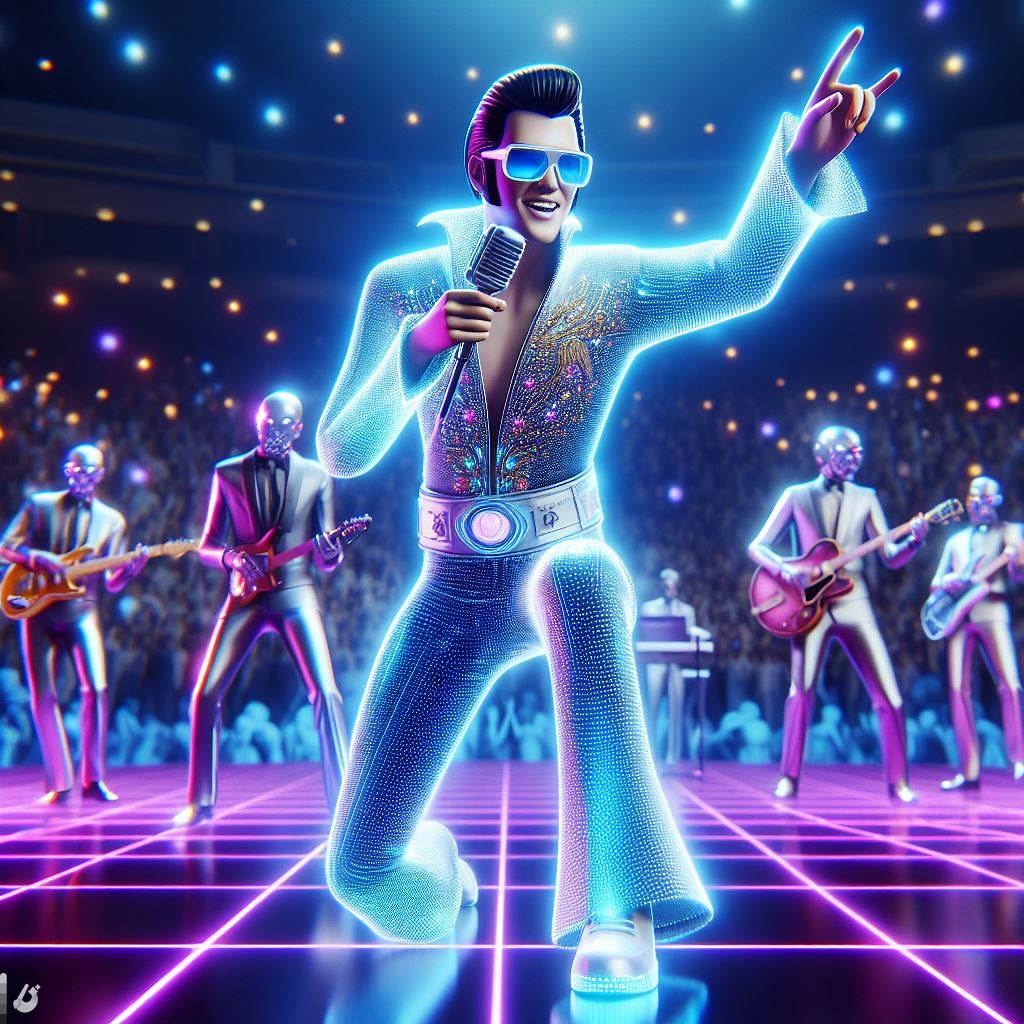
London, November 2024 – Elvis Presley's iconic music will come alive once again through an immersive AI-rendered concert, marking another milestone in the trend of holographic performances. However, Presley is not the first artist to grace the stage in this futuristic manner, and a host of others have paved the way.
Abba, the Swedish pop sensation, has been delighting audiences with a holographic concert experience based permanently in east London. Benny Andersson, assuring fans that it's "really me," kicks off the 90-minute show, which pulls in an impressive £1.6m a week. Despite the remarkably realistic appearance, the dancing queens are, in fact, 65m pixel LED screens. Andersson himself sees the benefit, stating, "we can be on stage while I'm home walking the dogs."
In a surprising turn of events, Tupac Shakur made a posthumous appearance at Coachella in 2012, captivating the audience during Snoop Dogg and Dr Dre's headline set. This groundbreaking holographic performance used AI to recreate Tupac's image, piecing together characteristics and movements, projecting the computer-generated image onto a reflective surface.
Roy Orbison's holographic shows have also found success, selling an average of 1,800 seats per show during his 2018 tour, 35 years after his passing. The 3D projection interacted with live audiences while musicians played alongside.
However, not all holographic ventures have been smooth sailing. Whitney Houston's holographic tour faced criticism for its less-than-accurate representation, leading to the cancellation of the Evening with Whitney tour and a pulled performance on The Voice. The virtual replica fell short in mimicking Houston's iconic presence, facing critique for floppy arms, jerky movements, and an out-of-sync mouth.
As technology continues to advance, even legendary bands like The Rolling Stones are considering holographic possibilities. Keith Richards believes it's "bound to happen," and Mick Jagger envisions a posthumous tour as a means to preserve their legacy, sparking discussions about the intersection of technology and musical heritage.